Start Selling
We also build custom online stores and multi-vendor marketplaces with simple, integrated tools for managing inventory, pricing, and orders.
Start Selling Today


Last updated: October 14, 2026
Quick Answer
A township online store is a low-cost, mobile-first digital shopfront that lets kasi and rural entrepreneurs sell products beyond their street, accept digital payments like Yoco, SnapScan and Payfast, and manage orders straight from a phone. It works without a developer, without months of setup, and without a traditional storefront, making ecommerce for township businesses realistic for first-time entrepreneurs with limited data and inconsistent electricity.
Key Takeaways
A township online store is a simplified digital sales channel, usually built on a mobile-friendly website or linked through WhatsApp Business, that lets a kasi entrepreneur list products, take orders and get paid without needing a physical shop address. It works by combining three basic parts: a product catalogue customers can browse on a phone, a way to accept payment digitally or on delivery, and a messaging channel for order confirmation.
Most township online stores operate with far less complexity than big retail platforms. A spaza shop owner, hairdresser or home baker can set one up using:
This matters because more than 70% of South African households already buy from informal traders, spaza shops and hawkers.[10] Moving part of that existing trust online, rather than trying to build an entirely new customer base, is the fastest path to results.
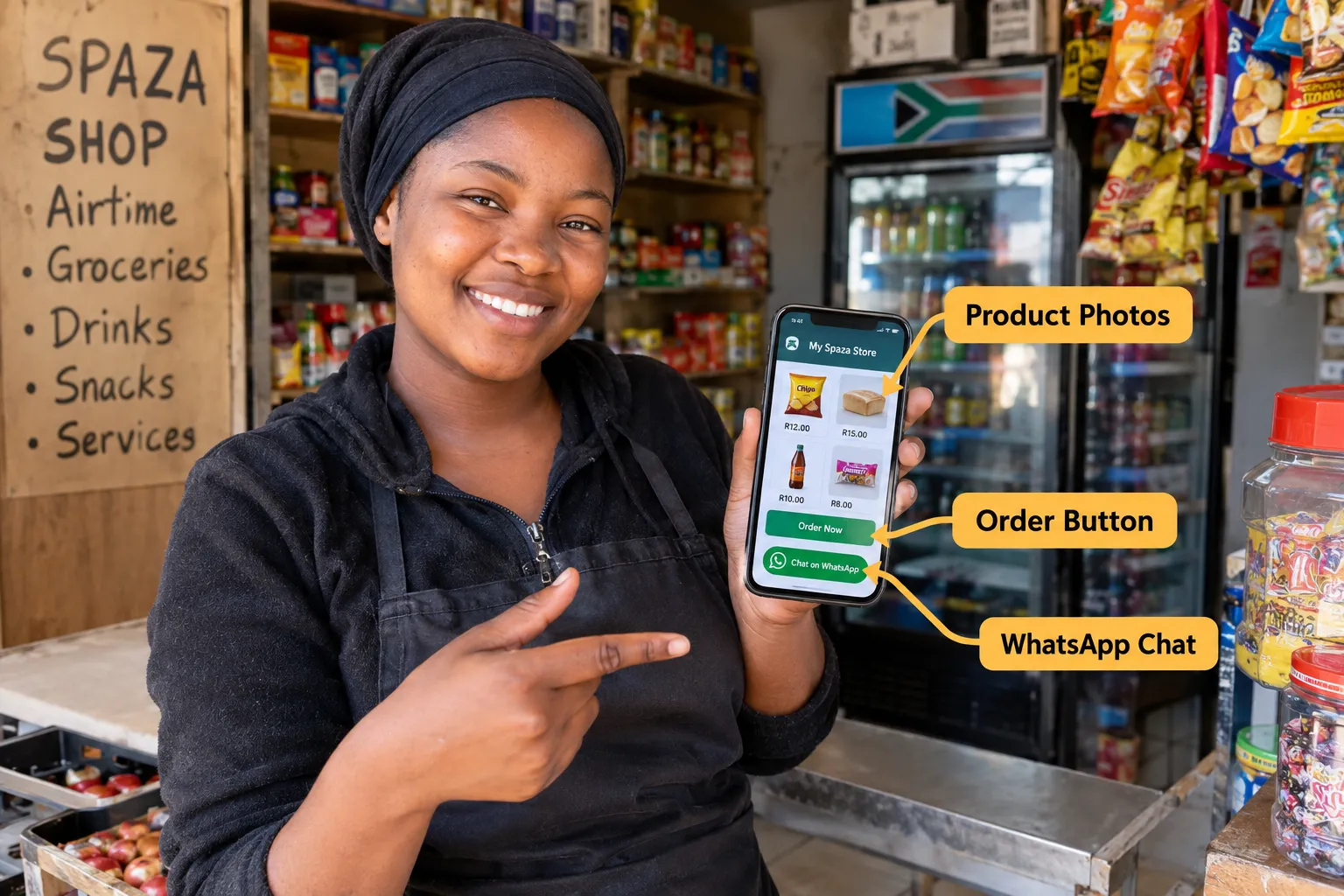
A kasi online store is built around mobile data limits, cash-based buying habits and community trust, while standard ecommerce platforms assume reliable broadband, bank cards and anonymous shoppers. Choosing the wrong model is one of the most common early mistakes.
| Feature | Kasi Online Store | Regular Ecommerce Platform |
|---|---|---|
| Primary device | Smartphone | Desktop or laptop |
| Ordering method | WhatsApp, simple product page | Full shopping cart |
| Payment style | Cash on delivery, QR, card reader | Card and EFT only |
| Trust model | Community reputation | Reviews and ratings |
| Data needs | Low, optimized for small bundles | Higher bandwidth expected |
Choose a kasi-style setup if most customers live nearby, pay in cash, or order through WhatsApp already. Choose a fuller ecommerce platform only once order volume and delivery radius grow beyond what manual messaging can handle.
Starting an online store for rural businesses or township shops is affordable, with basic packages beginning around R289 per month covering hosting, domain and setup. There is no need for custom software or a large upfront investment.
A practical starter package typically includes:
For a transparent breakdown of what's included at each tier, review the ecommerce shop pricing guide before committing. Entrepreneurs who want support choosing the right setup can also read more via the about us page to understand who is building these digital tools for township entrepreneurs.
Edge case: a trader selling fewer than ten items a week may do fine with a WhatsApp catalogue alone and should delay paying for a full store until order volume justifies it.
Township entrepreneurs typically combine cash on delivery with digital tools like Yoco card readers, SnapScan QR codes and Payfast payment links to reduce risk while keeping transactions simple. This blended approach reflects the cash-heavy, relationship-driven nature of kasi commerce.[9]
Newer infrastructure is accelerating this shift. Altron FinTech's Kasi Sales Squad, expanded from Soweto into Ekurhuleni and Johannesburg CBD in January 2026, onboards entrepreneurs onto DebiCheck-enabled debit orders, offline-capable POS devices, and digital disbursement tools.[4] The youth-led eKasi Traders Network applies a similar model, deploying offline POS devices and secure digital disbursement systems across thousands of township traders while building digital audit trails into informal commerce.[6]
Common mistake: relying on one payment method only. A store that accepts cash alone loses customers who prefer card or QR, while a card-only setup alienates cash-based regulars.
Running a basic township online store does not require fast internet or constant electricity. A standard 3G or 4G mobile data connection is enough to manage orders, update a catalogue and respond to customer messages.
To keep the store running during load-shedding or network dips:
Decision rule: choose offline-first payment tools if power cuts in the area happen more than twice a week; otherwise, standard online payment links are sufficient.
The most common mistake is copying a big-brand ecommerce setup instead of building around local buying habits, like cash payments, small delivery zones and WhatsApp-based trust. A one-size-fits-all strategy rarely works in township markets.[9]
Other frequent errors include:
Online selling for kasi entrepreneurs suits traders who already have repeat local customers, a smartphone, and at least one reliable way to receive payment. It is not the right first step for someone with no existing customer base, no product supply consistency, or no time to respond to messages daily.
Customers come from existing community trust first, then from local search and social discovery. A township online store does not need a physical address to operate legally or successfully, since many kasi traders already run mobile or stall-based operations.
Practical ways to attract buyers:
Success story reference: local delivery partnerships such as SPAR2U working with township-based Delivery Ka Speed, and Takealot's targeted township initiatives, show that even large retailers now design specifically for kasi buying patterns, validating demand for smaller local stores doing the same.[3][8]
Rural and township sellers typically rely on local delivery riders, collection points, or courier partners built specifically for kasi geography rather than national logistics networks designed for suburban addresses. Trust and small delivery zones, not technology, are the biggest barriers.[2][3]
Inventory from a kasi location is best managed by:
Platforms like Order Kasi and KasiD were built to close the last-mile gap between mainstream ecommerce and township consumers, offering a practical model for new entrepreneurs who cannot yet afford their own delivery fleet.[2][3]
A township online store works best when it matches how kasi customers already shop: mobile-first, cash-flexible, and built on local trust rather than copied from mainstream retail templates. Entrepreneurs who start small, pick one or two payment methods, and keep delivery zones realistic tend to see faster, steadier results than those who try to replicate a national ecommerce brand on day one.
Next steps: list ten products with clear photos and prices, set up one payment method and one WhatsApp ordering channel, then review the ecommerce shop pricing options to see which starter package fits current order volume before scaling further.
What is a township online store?
It is a low-cost, mobile-friendly digital shopfront that lets kasi entrepreneurs sell products through a phone, usually combining a simple catalogue with WhatsApp ordering and digital payment links.
Can I start an online store without a physical shop?
Yes. Many township traders operate from home, a stall, or mobile stock, and do not need a fixed business address to sell online.
How much does it cost to start?
Basic setups start from around R289 per month, covering hosting, domain and store setup, with no large upfront developer cost required.
What payment methods work best in townships?
A mix of cash on delivery, card readers like Yoco, and QR or link-based payments such as SnapScan and Payfast covers the widest range of customer preferences.
Do I need fast internet to run my store?
No. A standard mobile data connection is enough to manage orders, update products and reply to customers.
What happens during load-shedding?
Offline-capable POS tools and a charged power bank keep sales running even when electricity is unstable.[4]
How do I get my first customers?
Start with existing community contacts through WhatsApp, then list the business on Google and partner with nearby spaza shops for referrals.
Who should not start an online store yet?
Someone with no repeat customers, inconsistent stock, or no time to answer messages daily should build those basics first before going digital.
Start receiving WhatsApp orders and digital payments in no time. Find out how you can get started with your mini online store today.
Tags: township online store, kasi online store, ecommerce for township businesses, online selling for kasi entrepreneurs, digital tools for township entrepreneurs, online store for rural businesses, ecommerce for rural entrepreneurs South Africa, spaza shop digital tools, WhatsApp commerce, mobile ecommerce, kasi fintech, township small business